



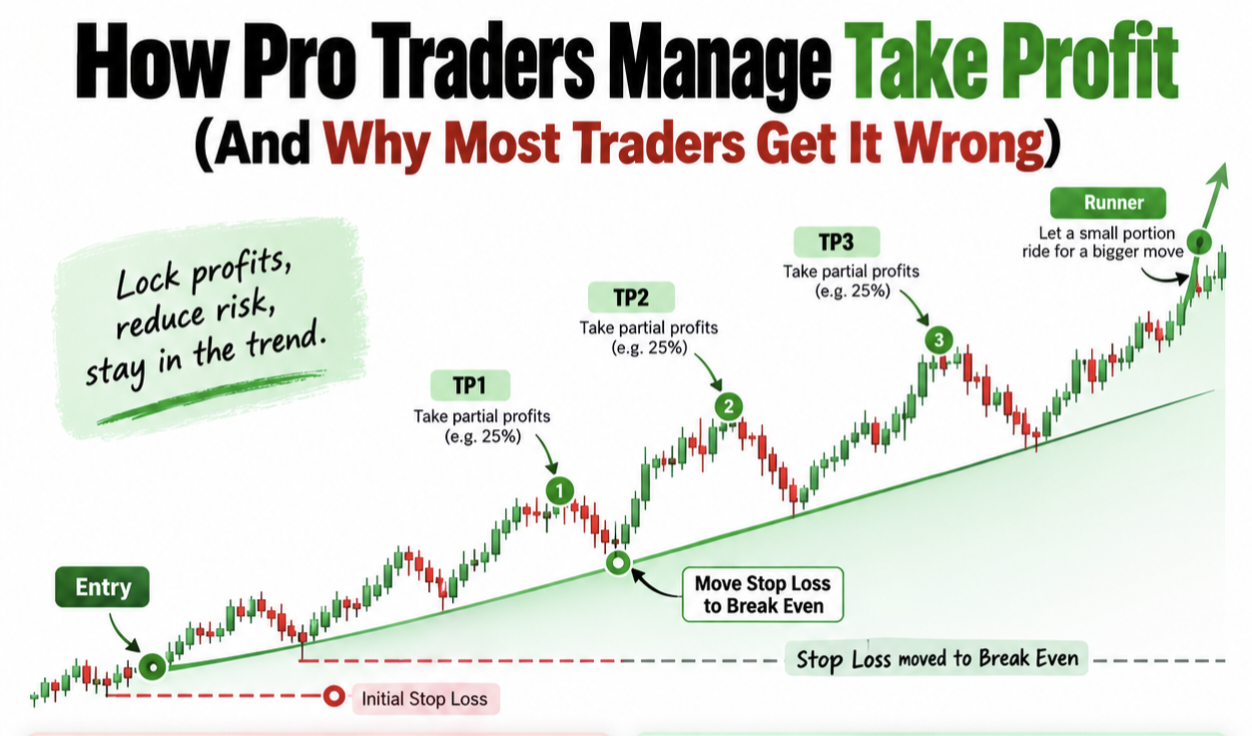
Most traders don't lose profits because of bad entries. They lose profits because of bad exits. You can nail the perfect entry on a Nifty 50 bluechip, watch the trade go your way, and still end up giving it all back—or worse, turning a winner into a loser. The difference between a pro and an amateur isn't the entry; it's how they manage the exit. Here are eight rules that separate the two.
1. Mindset First: Plan the Exit Before You Enter
Pro traders don't "hope" for profits. They plan exits before entering the trade. No emotions. No guessing. This is the fundamental shift. Amateurs enter a trade and then figure out what to do. Pros decide exactly where they'll take profit, where they'll cut losses, and how they'll manage the position before they even click 'buy' on their terminal. If you don't have an exit plan, you don't have a trade.
2. Partial Profits: Scale Out, Don't Sell All at Once
One of the most powerful tools in a trader's arsenal is the partial exit. Instead of selling your entire position at one target, you scale out. This approach is essential when trading volatile indices like the Bank Nifty:
- Take partial profit at key levels: Secure a portion of your gains once the trade moves in your favor.
- Let the rest run: Keep a "runner" to capture extended moves.
- Reduce stress: Locking in gains early clears your head and removes the pressure of the "all-or-nothing" mentality.
3. Structure-Based Targets: Not Random Numbers
Take-profit levels should be based on market structure, not random numbers. This is where most retail traders go wrong, picking a target because it "feels right" or because it's a round number on the Sensex. Instead, base your targets on:
- Previous swing highs and lows.
- Proven supply and demand zones.
- Liquidity areas where institutional orders are likely clustered.
The market respects structure. If you set your target at a level where price has historically struggled, you increase your odds of getting filled at an optimal price.
4. The Risk-to-Reward Rule: If It's Not Worth It, Skip It
Before you take any trade, ask yourself: is the reward worth the risk? Your minimum risk-to-reward ratio should be 1:2 or 1:3. If the math doesn't work, you skip the trade. It doesn't matter how "hot" the setup looks or how confident you feel; if the potential reward doesn't justify the risk, you stay on the sidelines.
5. Trail the Stop: Protect Profits Like a Pro
Once price moves in your favor, your job shifts from making money to protecting money. This is where trailing the stop becomes your best friend:
- Move your stop loss to breakeven as soon as the trade provides enough breathing room.
- Trail your stop behind market structure as the trend progresses.
Never give back big gains. The goal is to let winners run while ensuring you never turn a profitable trade into a loss.
6. Market Conditions Matter: Adapt or Die
Your take-profit strategy must change with the market type—a nuance many Indian traders miss:
- Trending Market: Let profits run. The trend is your friend; don't fight it by exiting too early.
- Ranging Market: Take quicker, systematic profits. If the Nifty is stuck in a tight consolidation zone, don't expect a breakout—book your gains at the resistance.
7. Emotions Kill Profits: Follow Rules, Not Feelings
Fear closes a trade too early; greed holds it too long. Both destroy your P&L. The only way to win is to follow your pre-defined rules. When you have a written plan for taking profit and trailing stops, you remove the emotional element. You stop making decisions based on your pulse rate and start making them based on what the charts are telling you.
8. The Pro Trader Rule: The Exit is Where Money is Made
Entry is important. Stop loss is protection. But take profit is where the actual money is made. Most traders spend all their time obsessing over entries, watching endless YouTube videos on the "perfect setup." But a great entry with a terrible exit is still a losing trade. Conversely, a decent entry with a disciplined, pro-level exit can consistently grow your account.
The Takeaway
Managing take profit is both an art and a science. It requires discipline, a solid plan, and the ability to adapt to changing market conditions. Most traders lose profits not because they can't find good trades, but because they don't know how to exit them. Master the exit, and you master the game.