



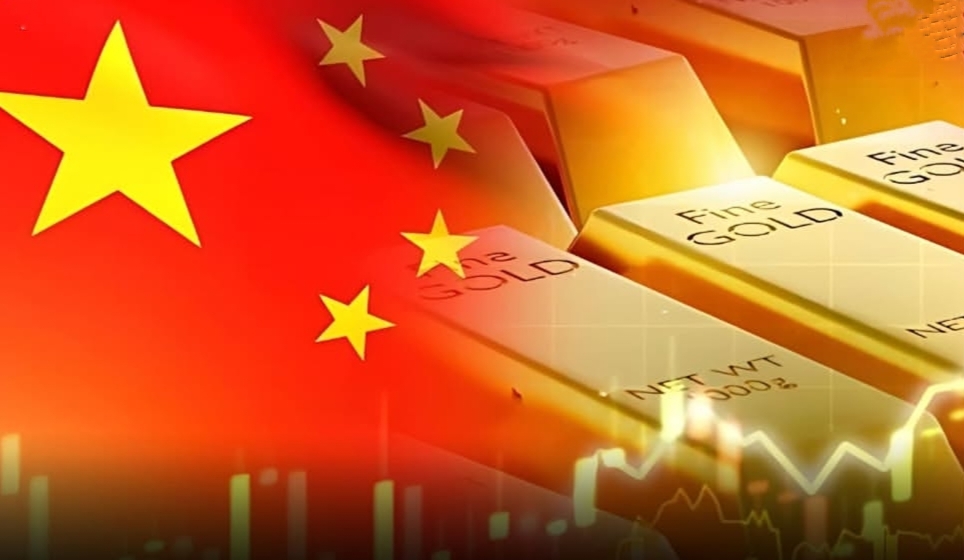
For decades, the US dollar has been the undisputed anchor of the global financial system. However, a massive, quiet shift is taking place in the vaults of central banks around the world. According to recent data highlighted by market analysts, China is accumulating gold at an unprecedented pace. But this isn't just a routine portfolio adjustment. It is a calculated, strategic move that signals a fundamental change in how nations view money, power, and security. Here is a breakdown of China’s massive gold buying spree, the hard lesson learned from Russia, and what this means for the future of the US dollar.
The Numbers Behind the Buying Spree
The scale of the accumulation is staggering. As of August 2025, China purchased an additional 60,000 ounces of gold. This brings their total holdings to a massive 74 million ounces (over 2,300 tonnes), worth an estimated $254 billion.
But this isn't a sudden panic buy; it's a pattern. Looking at the data:
- End of 2023: 2,100 tonnes
- Mid 2024: 2,264 tonnes
- August 2025: 2,300+ tonnes
This steady, relentless increase indicates a long-term strategic plan rather than a short-term reaction to market volatility.
The Catalyst: Lessons From Russia
So, why is China doing this nonstop? To understand the strategy, we must look at the geopolitical trigger: the Russia-Ukraine war.
When the conflict began, Western countries froze roughly half of Russia’s money that was kept in US dollars. This sent a shockwave through global capitals. It revealed a harsh truth: Dollar money can be blocked, but gold cannot be touched.
This realization forced every nation to rethink the safety of their reserves. If assets denominated in dollars could be weaponized, central banks needed a neutral, physical asset that could not be frozen by sanctions.
The Global Gold Rush
China is not alone in this shift. Central banks globally are on a buying spree:
- 2022: 1,136 tonnes (a record high)
- 2023: 1,037 tonnes
- 2024: 1,000+ tonnes again
Countries like Turkey, Singapore, India, and Poland are also aggressively accumulating gold. However, China remains the biggest story due to the sheer size of its economy and its ambitions.
China’s Strategic Goals
Why is China buying so much gold? The reasons go far beyond simple diversification:
- To reduce trust in the dollar: By holding more gold, China insulates itself from potential US sanctions and dollar fluctuations.
- To make the Yuan stronger: A strong gold backing gives the Chinese currency (Yuan) more credibility on the global stage.
- To build a safety wall for future risks: Geopolitical tensions and economic uncertainties require a secure, tangible store of value.
Despite its massive buying, China is actually still under-allocated compared to the rest of the world. Gold currently makes up only 7% to 8% of China's reserves, whereas the global average is around 15%. This implies that China still has plenty of room to buy a lot more, which will continue to move the gold market.
The Effect on Prices
This strong, global buying pressure has sent gold prices soaring. In 2025, gold prices touched $3,600 per ounce, which is almost 38% higher than the previous year.
Experts believe that if this trend of central bank buying continues, the price of gold could go even higher.
The Bigger Picture: Money and Power
This is not only about gold. It is about money and power. Step by step, the world is moving toward less trust in the dollar and more trust in gold.
China’s nonstop gold buying is a central part of this big change. As nations continue to prioritize tangible assets over fiat currencies, this shift may fundamentally shape the global money system for the next many years.